helpline: 0300 30 200 30
helpline@porphyria.org.uk

Elizabeth

Sophia: Support for EPP patients

BPA Blog: Every Cloud....
After having my annual EPP checkup with the wonderful Dr Badminton, I felt it was the right time to refresh myself on the additional support that is available for EPP patients. Living with EPP, you’ll understand the feeling of not wanting to burden anyone with the levels of pain you experience under the surface so it felt quite unnatural for me to want to ask for help and to start reaching out for help. In doing so, I found that the people I spoke to have been incredibly supportive and forthcoming with their knowledge sharing.

So here’s a non-exhaustive list of the additional support I have found helpful and have refreshed myself on over the past few months:


Blue Badge

I never considered applying for a blue badge but upon researching, I can see its many benefits for someone living with a psychological condition (which I would consider EPP to be). People with hidden disabilities can now apply for a Blue Badge (please note that people with EPP may be unlikely to fit the usual criteria). For many of us, our car is a ‘safe haven’ at times and parking close to buildings can be essential to minimising pain and suffering. The people I spoke to at my local council were extremely helpful and made me feel included and validated in my condition. You may need support from your GP or specialist when applying. It’s worth giving it a go if it will mean peace of mind for example, when you’ve had an exposure and you need to head out to do errands in the sunshine. 

For more information about how you can apply, check out: www.gov.uk/apply-bluebadge.


Dundee Cream

If I say Dundee, what comes to mind? For some of us, it’s a beautiful location in Scotland, for others, it’s the reflective (sometimes messy, opaque), suncream. Dundee provides good results for some EPP patients and it’s definitely worth giving this one a go if you haven’t tried it already. It’s quite hard to come by so consult your GP to have them prescribe this medical-grade sun cream for you. You can find out more about this sun cream & other skincare advice on the BPA website.


Specialist doctors

Whilst I wouldn’t advise swamping your GP with all of your EPP concerns – we know how overrun the NHS is at the moment; I would encourage you to bring your questions that may have accumulated over lockdown to your designated Porphyria specialist. My specialist Dr Mike Badminton has been a lifesaver when it comes to those tricky questions from Vitamin D tablets to travelling. Don’t be afraid to also reach out to the BPA community via our facebook group for advice and support on all things Porphyria.

When I started to reach out, I found there was a lot of support out there which helped me to feel less alone in the condition. Note to self, being vulnerable is not a weakness and more often than not, people want to help you! There is so much more available to us than this blog post suggests and the BPA website hosts a huge amount of resources regarding additional support so grab a cup of tea and have a browse around the website. 

Have you tried any of the support options highlighted above?  Drop us a comment on our facebook page and share what’s helped you! We’d love to hear from you.

Previous blogs

Read more

Sophia: How you can feel comfortable during the summer months (when you haven’t had enough exposure in spring)

BPA blog: Every Cloud....

With such a sunless spring, the first few hot days of summer have been tough for those of us living with EPP. Whilst we are experiencing a heatwave at the moment, it has been tough for some of us to build up a comfortable level of protection on our skin ahead of the summer months. Having a good amount of exposure pre-summer doesn’t just mean we have more protection physically, but our emotional wellbeing can be impacted as well. If we don’t feel as prepared and ready as we’d like to be, it can leave us feeling uncomfortable spending time outdoors leading up to the summer sunshine months (or in the UK’s case, the summer sunshine days).

So here are my top tips on how you can feel comfortable during the summer months (when you haven’t had enough exposure in spring):


Your EPP buddy

We know the feeling all too well, you’re invited to a family event and you have the initial pang of excitement followed by the sinking dread because it’s going to a sunny outdoor event. Choosing a buddy to support you at events can help. Whilst it doesn’t remove the fear of actually being caught out in sunlight, having a buddy who you feel comfortable speaking to when you’re at the function can make a huge difference. Someone else to have your back and keep checking in with you can allow you to feel much safer and more comfortable when it isn’t always easy to speak out. If you have a child with EPP, work with their teachers to put a plan in place for lunchtimes, sports days etc. Reach out and ask for support.


Little and often

We haven’t had much exposure to sunlight leading up to the spring months but adaptability is your middle name! It’s about taking advantage of those opportunities when you spot them. There is a heatwave in the UK at the moment and I have been using this time to gradually and carefully top-up my exposure in gradual increments. Make sure to be incredibly mindful of your exposure times and what works best for you. Each one of us experiences symptoms and exposures differently. For me, sitting outside in the garden in the early AM and late PM each day has really helped me to acclimatise in small steps and build my confidence up again.


Communication is key

When we’re feeling worried about stepping outside again, we can easily begin to fall into the trap of feeling alone in our condition. I’ve found that when I share concerns with family members or a close friend whom I trust, that they have a way of comforting, supporting and reframing my fears. For example, last week when I went on a mini-break to Wales, my friend and I went on a walk and I started to worry about the sun exposure. Rather than keeping it to myself, I told my friend I wanted to head back, but I was worried she would be annoyed. Her response? ‘Absolutely not!’ and ‘If someone you were walking with had asthma or a bad back and needed to recover, would you want to be the source of them being ill?’ Hearing my friend reframe the narrative in my head and rephrase it with logic helped to change my perspective on the experience to one of normalising and empathy. I encourage you to be brave and open up to those closest to you, you never know what insight they might offer?!


Find your indoor sanctuary

Engage in rituals, routines and activities that make you feel good. It’s so important to have your go-to self-care activities that allow you to connect back to you, no matter the weather. Anything from a simple moment to be with yourself over a cup of tea and a good book, to longer routines such as yoga and then a bath. Incorporate rituals that support and nourish you when the weather gets warmer so that you have an indoor sanctuary ready for when you start to feel anxious. As a mindfulness teacher, I’m slightly biased that daily meditation and mindfulness practise can greatly improve our overall happiness and wellbeing. This is my absolute essential routine to engage in daily and I often practice mindfulness before heading outside for longer periods of time to ground me and keep me present.


Keep connected

The BPA Facebook group is a fantastic way to get connected with your fellow EPP cohort! Here you can share your experiences, keep up to date on the latest news and research regarding the porphyrias in the UK, and discover porphyria tips and tricks. Feeling supported is an essential element to living with the disorder and the BPA have an incredible team working behind the scenes to support you.

So whether you are feeling ready to get out there this summer or pretty anxious about taking a step outside, keep connected, be kind to yourself and go at your own pace.

Previous blogs

Read more

Sophia: The Beginner’s Mind

The Beginner's Mind

“The beginner’s mind sees many possibilities, the expert’s only a few.” Shunryu Suzuki

The beginner’s mind or (Shoshin) is the simple mindfulness practice of seeing life through a beginner viewpoint. A concept which originates from Zen Buddhism, this concept has been practiced for many years and it’s a state of mind that the west is starting to pick up on.

The mindset is simple. When you experience something for the first time, you adopt a natural state of mind which is free from judgments and expectations and filled with curiosity and acceptance.  Think children learning something new, they often ask lots of questions and bring a natural sense of play and exploration to a new experience.

I know with restrictions still in place across the world, and for those of us living with physical or mental limitations, it can sometimes feel that we aren’t moving forwards with life – feeling somewhat stale and stagnant. Applying the beginner’s mind to our everyday lives can help to tease out a curious childlike nature that we often loose as adults.

Here are 3 simple tips to adopt this mindset:

Get curious: Emanate a child’s world view which is new and beautiful, full of wonder and excitement. A great way to do this is by asking simple questions when approaching a task or subject matter you believe to be an expert in. Asking questions is at the heart of beginner’s mind. Let go of the presumption you know the answer.

Let go: I wonder how many times the word ‘should’ comes up in your inner dialogue throughout the day? This is definitely true for me! Try removing this word from your vocabulary. Instead ask yourself, “how could I make this fun?” or “let’s give this a try” and you can see a positive shift in your attitude towards the experience.

Find the play in the everyday: I’m a big fan of embracing the inner child and letting your creativity and imagination flow in little moments throughout the day. The way I practice this is by laughing and being silly with those closest to me. Try finding the game and play in the every day.

There are so many benefits to the beginner’s mindset; deeper gratitude, more creativity, fun and playfulness to name a few.

Quite simply, the beginner’s mind is empty. That is, it holds no preconceived ideas or rules about what is and this allows us to cultivate a fresh and exciting perspective on life.

As the Zen teacher, Shunryu Suzuki, writes:

“If your mind is empty, it is always ready for anything; it is open to everything.

In the beginner’s mind there are many possibilities; in the expert’s mind there are few.”

Previous blogs

Read more

Sophia: Travelling with EPP – Apr’20

BPA Blog: Every Cloud....

Travelling with EPP

Living with EPP can sometimes mean you are limited in what you want and can achieve in life. This was my thinking for years anyway. After finishing University at 21, I watched as friends and family members headed off on their gap year travels around the world. Hearing their stories, motorbiking around the North Thailand countryside, trekking through the Vietnamese jungle and island hopping around Cambodia, all of which seemed daunting, inaccessible and downright terrifying to me! Little did I realise, but with careful planning and preparation and a bit of blind faith, I would be experiencing all of this and more!

It all started a year ago whilst chatting with one of our committee members, Antony Fearn (who lives with EPP), about his recent travels to Malaysia, Borneo and Western Australia. During this time, a seed of an idea was planted in my head… ‘Maybe I could go travelling?’

Fast forward to August 2019 and I was heading off with my best friend to Vietnam, to 40-degree heat, blue, clear skies, outdoor activities and a complete lack of knowledge as to whether I could manage with my EPP symptoms.

In preparation, I made sure I built up as much of a top-up tan as I could during the summer months ahead of my trip, I purchased sensible clothing to protect me (hat, gloves and trainers) and I mentally prepared myself that I might have to head back home after a few days in Vietnam, if the condition proved to be too challenging.

Well, it was a success! 40-degree heat and sunshine almost every day. I took part in outdoor activities like hiking, swimming in the ocean and kayaking. Travelling has been one of the most amazing experiences of my life and has really helped me to think of my condition in a different way.

Here’s what travelling with EPP has taught me:

  • Your internal fears are usually worse than what you ever experience in real life. The imaginary, is much greater and scarier than actually doing the ‘thing’ you’re afraid of. Sometimes you have to just try it!
  • Part of the fear of travelling was overcoming what others think of me. I have found growing up with EPP, that I developed a fear of what others would think about my condition. With travelling, I purposely put myself in a situation where I couldn’t hide from EPP. In order to have the same experiences as other people and do the activities on my holiday that I wanted to do, I had to open up to new people about my condition and found I was met with positivity and understanding.
  • Be brave and keep pushing yourself – my limitations have been stretched beyond what I thought was possible. If you’ve been able to cope with the condition growing up then you will have some of these qualities – strength, courage, determination and resilience. That’s your toolkit for living with EPP which you can use whenever you are faced with a new challenge!

And I didn’t stop with Vietnam. This was just the beginning of my trip! Since August 2019, I have solo travelled around Thailand, Laos, Cambodia, Hong Kong and most recently Myanmar. I have visited some of the most beautiful places on earth, I’ve made international friends, gained knowledge about other countries’ cultures and histories, and gained a lot of confidence and belief in myself and my abilities.

Previous blogs

Read more

Sarah and Matthew’s phototherapy adventure Jun’19

BPA Blog - Every Cloud....

Living with porphyria requires a huge amount of bravery. For those of us living with Erythropoietic Protoporphyria (EPP) stepping out into the sunshine takes courage and strength. One of the treatment options available to us is phototherapy which requires patients to stand in a ‘walk in light box’ where narrowband UVB fluorescent light bulbs are used for a few minutes at a time and increased over each session. Carefully exposing the skin to artificial light allows it to thicken and build up a tan which can act as a sun block.

Sarah and Matthew, two young people living with EPP share their experience with phototherapy and take us through the many emotions experienced when trying phototherapy for the first time…


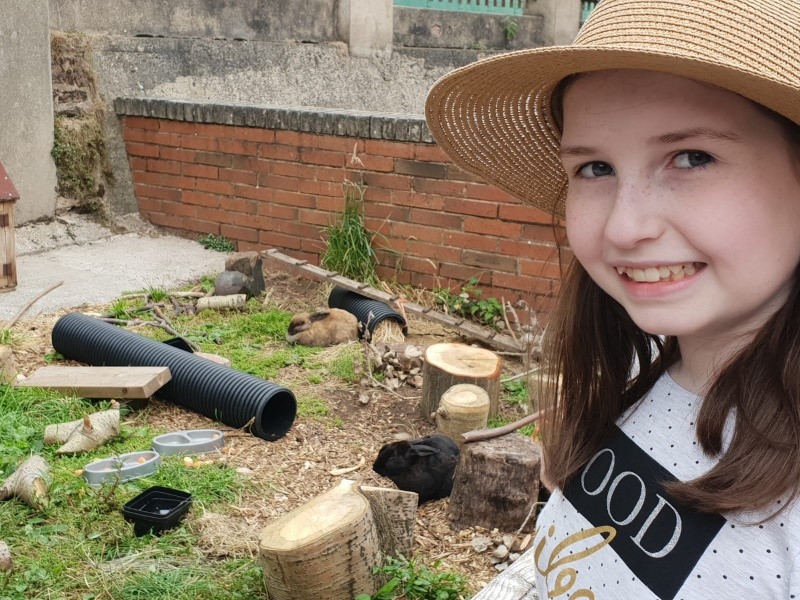
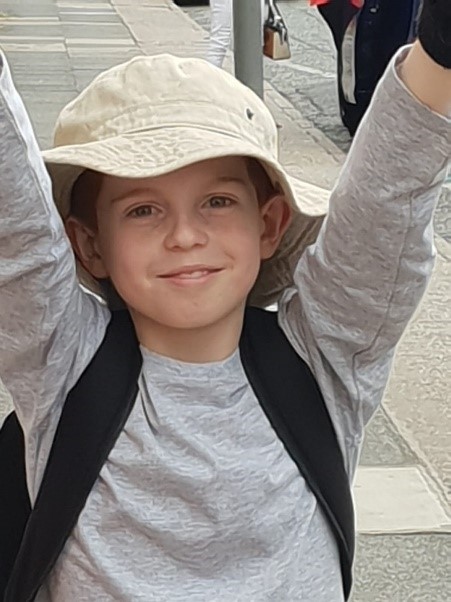
Hi. My name is Sarah Chapman. I’m fourteen and I have EPP.

I have a little brother called Matthew and a big sister called Rebecca. Matthew has EPP too and Rebecca doesn’t. Recently, me and Matthew finished phototherapy at the RVI in Newcastle.


Phototherapy is when you go into a big cabinet and a nurse turns on a controlled amount of UV light. It is a very low dosage at the start for a low amount of time and it gets higher and higher as the treatment progresses. The aim of phototherapy is that our bodies build up a resistance against UV light so that we can go outside for a short period of time without needing to wear our hat and gloves the whole time.

When our doctor first recommended phototherapy Matthew was excited to try it but I wasn’t sure. At first, I refused but as time went on, I warmed up to the idea. When we first went to see the lady in charge of phototherapy, she told us how it would work. We then went and met the nurses that work there. We then looked at the cabinets and I felt overwhelmed and I got a bit upset.

At the first appointment, on a Thursday, I was convinced I wouldn’t be able to do it. I got ready to go in and then I got really nervous. I got in position in the cabinet ready to go with my Mam standing just outside and Matthew was in the one next to me with my Dad. Just as the nurse switched mine on, I heard Matthew shout “NO! STOP! I CAN’T DO IT!!!” I managed to do mine and I got out and went to see Matthew.  He said he was frightened and didn’t want to do it.  One of the nurses thought it would help him by thinking of the sun on the beach. Clearly the last thing to suggest to a boy who has spent the last seven years avoiding sunshine! We went home and Matthew had till Tuesday to decide if he wanted to do it. I told him that it wasn’t painful just warm and tingly!!!

On Tuesday, Matthew decided to do it. I went first to show him that it was safe and then it was his turn. He did it! I was so proud of him. The nurses gave me some aveeno moisturiser to help the places that were itchy. Matthew got some certaben ointment. We put the cream on all of the itchy places after we got out.  As the weeks went on, we needed our creams less and less. Also, I started to get my first tan ever and I was very excited!!

We went to all of our appointments and the dosage got higher and longer as time went on. Eventually, we got to the last one and we said goodbye and thank you to all of the lovely nurses and we went home.

Now, when it isn’t super sunny, we put on our sun cream and we walk to school without wearing our hat and gloves because we can just put them in our bags!!

I know this isn’t a permanent solution for us but we hope it will help us enjoy the summer. We have already made arrangements with the hospital to go back in February to start another course of treatment.

Previous blogs

Read more